This chapter explores a tradition through selected dishes and stories. Customs vary across households, regions, and generations.
The pie they postponed Thanksgiving for
There is a story New Englanders like to tell on themselves. Sometime in the eighteenth century, a Connecticut town, Colchester by legend, found itself days out from Thanksgiving with a problem: the molasses wagon was late. Without molasses there could be no pumpkin pie, and without pumpkin pie there could be, as far as anyone was concerned, no Thanksgiving. So the town moved the holiday. Pushed the whole day back a week and waited for the sugar to come.
You do not move a town's Thanksgiving for a side dish. You move it for the thing the day is about, and in New England, for a long stretch of American history, the pie was a rival to the turkey for the center of the meal.
The fruit was here first
Before it was a pie, and long before it was New England's, the pumpkin was the continent's. Pumpkins are winter squashes in the genus Cucurbita, among the oldest cultivated foods in the Americas, grown by Indigenous peoples for thousands of years as part of the Three Sisters, planted in a knot with corn and beans. When the English arrived in New England, they arrived hungry and unprepared, and among the crops that carried them through was one already growing here. The colonists did not discover the pumpkin. They were fed it, by people who had been eating it for millennia, and the pie that became a symbol of the Pilgrim table grew from a plant the Pilgrims found waiting for them.
The colonial pumpkin pie didn't start as a pie in the way we mean it. One oft-repeated early method describes a whole pumpkin hollowed out, filled with milk, spices, and honey or molasses, then roasted near the hearth: a custard baked inside its own shell. The crust came later. The idea was already complete.
The spice was the luxury
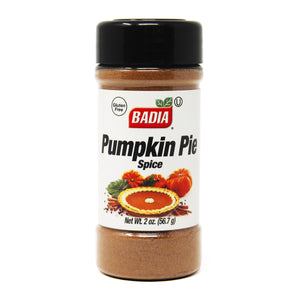
The pumpkin was local and abundant. The spice was imported, expensive, and conspicuous, and the spice is the whole reason the pie tastes like a holiday. Cinnamon, nutmeg, ginger, clove, allspice: none of it grew in New England. All of it came in on ships, through the same trade that made a jar of nutmeg a small statement of means. To spice a pumpkin was to dress a common field crop in something precious, which is why it belonged to the feast and not to Tuesday. That warm quintet is still the entire signature of the pie. Take the spice out and you have a bland squash custard. Put it in and you have the smell that means the fourth Thursday in November before you've seen a single dish.
By 1796 the pie had made it into print: Amelia Simmons' American Cookery, the first cookbook written by an American, gives a recipe for "pompkin" baked in a crust with the spices and the cream. The custard-in-a-shell had become the custard-in-a-pastry, and the pastry stuck.
The editor who sold it to a nation
This pie is official because someone made it official, on purpose, and the campaign has a name. For most of the 1800s, Thanksgiving was a New England thing, a regional harvest holiday the rest of the country regarded with mild suspicion. The woman who changed that was Sarah Josepha Hale, a magazine editor from New Hampshire who spent decades campaigning, in print and in letters to five presidents, for a single national day of thanks. Her campaign helped culminate in 1863, when Lincoln proclaimed a national Thanksgiving. And the table Hale sold to the country was her table: the New England spread, roast turkey and all the trimmings, finished with pumpkin pie. The pie didn't become the national dessert because a nation voted on it. A New England editor put it there and would not be moved.
The children's rhyme most Americans can still half-sing comes from the same New England world. Lydia Maria Child's 1844 poem, the one that goes over the river and through the wood, ends not on the feast in general but on one specific line: hurrah for the pumpkin pie. Not the turkey. The pie.
The decided pie
So when a pumpkin pie comes out of the oven anywhere in America, barely set, the surface just short of cracking, the kitchen suddenly smelling of clove and cinnamon, what's cooling on the rack is the most decided dessert in the country: the one the cookbooks agreed on, the one an editor helped win a national holiday for, the one a town once moved its Thanksgiving to protect.
Other chapters argue with it. Sweet potato pie, one page over, quietly wins its own table, and it has the better case. But this is the pie the country was taught first, and for a lot of America, the smell of it is Thanksgiving, arriving through the kitchen a day early.