HOW AMERICA GATHERS · THANKSGIVING

CHAPTER · NEW ENGLAND — THE CLASSIC

The Original That Wasn't

The most "original" Thanksgiving in America wasn't handed down from the Pilgrims. It was written by a magazine editor, mailed to the nation one November at a time, until everyone forgot it had ever been a recipe at all.

The Bird — sage-brined roast turkeyThe Canon — the menu that refuses to changeThe Author — Sarah Josepha Hale, 1863The Gathering — the New England farmhouse table

Come up over the bridge into the cranberry country of southeastern Massachusetts on the fourth Thursday of November and the whole place looks like a memory of itself. White clapboard, bare trees, a meetinghouse on the green, the bogs gone deep red and frost-stiff at the edges. Boots come off the porch wet with leaves, the door swings open, and the first thing that reaches you is the smell that is the holiday: rubbed sage going dark in melted butter. Inside, the windows fog from the heat of the kitchen, and on the table is a meal so familiar it barely needs describing: a burnished turkey, bread stuffing gone gold at the corners, mashed potatoes steaming, a boat of gravy, creamed onions nobody loves but everyone keeps, a relish tray, Parker House rolls pulling apart in soft seams, and a quivering red cylinder of cranberry sauce that still wears the ridges of the can — and is defended, in most houses, to the death.

This is the table the rest of America measures itself against. The control group. The "real" Thanksgiving, the one your second-grade construction-paper turkey was based on. And here is the thing almost nobody at that table knows: it isn't old, and it isn't an accident. It was written.

The woman who wrote Thanksgiving

For most of American history there was no national Thanksgiving and no agreed-upon menu. Each New England town kept its own harvest day; some states marked it in October, some as late as January, and much of the South didn't mark it at all. The holiday we picture — turkey at the center, sage in the stuffing, pie at the end — was largely the work of one person: Sarah Josepha Hale, a New Hampshire–born editor of Godey's Lady's Book, the most widely read magazine in the country before the Civil War.

Hale spent the better part of forty years on it. In her 1827 novel Northwood she devoted an entire chapter to a glowing description of the Thanksgiving table — the roast turkey, the gravy and savory stuffing, the pies and preserves — and then, from her editor's chair, she spent decades printing that vision every November and writing letter after letter to five presidents asking for a national day. The fifth one answered. In 1863, in the bloodiest year of the Civil War, Lincoln proclaimed a national Thanksgiving, and Hale's magazine menu rode out into the country on the back of it. The "ancestral" New England table didn't trickle down from Plymouth Rock. It went out in the mail.

That's the quiet joke at the bottom of this whole series. The chapter that's supposed to be the unchanging original is, in truth, the most deliberately authored table in America — a vision of hearth, restraint, and rural simplicity, art-directed by an editor and subscribed to by a nation. Every other chapter in this book bends the holiday to fit a people. New England's genius was to convince everyone it had never bent at all.

What was actually on the first table

And the deeper you go, the more the postcard dissolves. The famous 1621 gathering at Plymouth was a three-day harvest feast, part celebration and part fragile diplomacy with the Wampanoag — and it looked almost nothing like the meal on the table today. There was venison and wild fowl, corn and squash, and the cold bounty of the coast: eels, clams, mussels. No cranberry sauce — the colonists had no sugar to make it. No pie — no ovens, little flour. No mashed potatoes; the potato hadn't yet arrived in New England. Even the turkey is a maybe; the records only say "wild fowl."

One honest beat before moving on: the people actually at that first table don't share the reverence. For the Wampanoag and many Native communities, the day carries a different weight, marked since 1970 as a National Day of Mourning — a harder history under a tidier painting. A chapter about how America gathers owes it that much truth, then sets the table it actually eats at.

The cranberry and the bog

If anything on the modern plate is genuinely, defensibly New England, it's the one thing in the dented red cylinder. The cranberry is a true native — a tart wild berry from the acid bogs of Cape Cod that stayed local for two centuries because it was too delicate to travel, until canning in the early 1900s gave it a shelf life and a nation. But it earned the table on flavor: a small, sharp, ruby correction to all that richness, cutting through the bird and the butter and the gravy like a cold snap through a warm kitchen. The taste of the place became the taste of the holiday.

The religion of restraint

What New England actually gave Thanksgiving isn't a flavor — it's a posture. Where Miami's table is loud and improvised, this one is quiet and rehearsed, and proud of it. The whole aesthetic is restraint: sage, butter, salt, bread, the bird, the bog. The seasoning is subtle on purpose. The dishes are the same dishes, in the same order, off the same handwritten card in the same looping cursive, and the unspoken rule is that you do not touch them. The creamed onions stay even though no one finishes them. The relish tray appears even though it's mostly olives and a guilty stick of celery. To change the menu would be to admit that it was a choice — and the entire magic of the New England table is the feeling that it was never a choice, just an inheritance.

Of course, it was a choice. Hale chose it. And once you know that, the table gets warmer, not colder — because it means tradition was never a thing handed down from on high. It was a thing a person made, on purpose, and then everybody kept making because the keeping was the point. That's the most American thing of all. New England didn't preserve Thanksgiving against change. It just got the first word — and then handed the country a blank table and a sharp knife, and let every kitchen after it write the next line.

That's how America gathers in New England: by setting the original table so carefully that the rest of us spent the next century lovingly arguing with it.

Gather Your People

The brine is the whole secret. A New England turkey lives or dies on moisture, and the fix is older than your stove: a saltwater brine. Dissolve salt and a little sugar in water with the kit's aromatics — sage, thyme, bay, peppercorns — and submerge the thawed bird overnight (a clean cooler works if it won't fit in the fridge). Short on space? Dry-brine instead: rub salt and the herbs directly on the skin and under it, and let it sit uncovered in the fridge a day or two. Either way, the goal is the same — seasoned deep, and skin dry enough to crisp.

Sage butter, under the skin. Soften butter, work in rubbed sage and thyme, and slide it under the breast skin with your fingers so it bastes the meat from the inside as it roasts. Pat the skin bone-dry on the outside. Roast breast-up, and pull the bird at temperature, not by the clock — then rest it, loosely tented, a full 20–30 minutes before carving. The rest is not optional; it's the difference between juicy and sawdust.

The gravy is the drippings' reward. Don't waste the bottom of the pan. A spoon of fat, a spoon of flour, whisk, then the drippings and stock — and a torn bay leaf and a little more sage to tie it to the bird. That pan gravy is the spine of the plate; everything else is just leaning on it.

Make it the gathering. The New England move is the make-ahead: brine and bake what you can the day before so Thursday is calm, not frantic. Put someone on rolls, someone on the relish tray, and hand the cranberry to whoever cares the most — and never, ever propose changing the menu out loud.

The whole country cooks at once — and nobody cooks it the same.

Every table tells the story of the people around it.

Shop the Chapter

The Badia shelf behind this table — add it all in one tap.

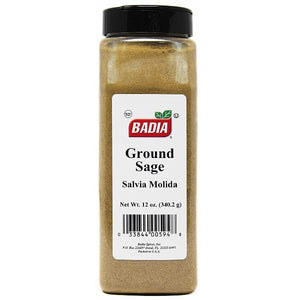
Badia Ground Sage Spice, 12 oz
Badia Ground Sage Spice, 12 oz $10.56
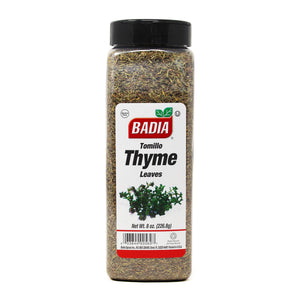
Badia Thyme Leaves Whole, 8 oz
Badia Thyme Leaves Whole, 8 oz $7.12
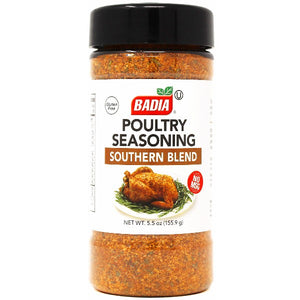
Badia Poultry Seasoning Southern Blend, 5.5 oz
Badia Poultry Seasoning Southern Blend, 5.5 oz $4.05
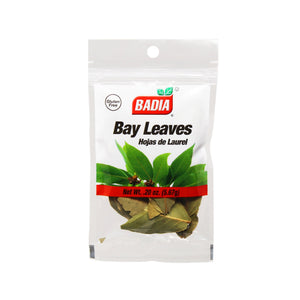
Badia Bay Leaves Whole, 0.20 oz
Badia Bay Leaves Whole, 0.20 oz $1.26
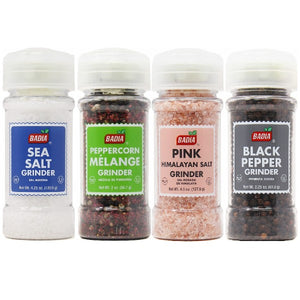
Badia Sea Salt, Peppercorn Mélange, Pink Himalayan Salt & Black Pepper Grinder Bundle
Badia Sea Salt, Peppercorn Mélange, Pink Himalayan Salt & Black Pepper Grinder Bundle $17.27
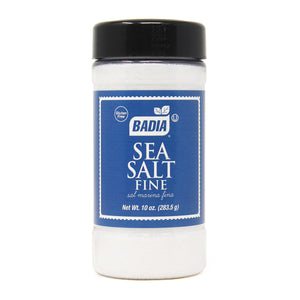
Badia Sea Salt Fine, 10 oz
Badia Sea Salt Fine, 10 oz $3.08

Good to know

Why do we eat turkey and stuffing on Thanksgiving?

We eat turkey and stuffing on Thanksgiving largely because of magazine editor Sarah Josepha Hale — not the 1621 Pilgrims. Hale spent decades popularizing the menu in Godey's Lady's Book during the 19th century, and her New England table became the national standard after President Abraham Lincoln proclaimed the holiday in 1863.

Why do we eat turkey on Thanksgiving?

Hale standardized it; Lincoln nationalized it, 1863.

Was there turkey at the first Thanksgiving?

Records say only "wild fowl"; no pie, no cranberry sauce, no potatoes.

What's on a traditional New England Thanksgiving menu?

Sage-roast turkey, bread stuffing, mashed potatoes, gravy, creamed onions, cranberry sauce, rolls, pie.

How long should you brine a turkey?

Overnight wet-brine, or 1–2 day dry-brine.