The custard everyone claims
There is one dessert that keeps turning up at the end of the meal across Latin America, and it is not up for debate. Right up until you ask whose is best. Then it becomes the only debate. Flan is a silky egg custard turned out of its mold under a slick of dark caramel, cool and trembling and just sweet enough. Country after country claims it as its own (Brazil makes its close cousin, pudim, just as devotedly), each cooking it for holidays and half the Sundays in between, each holding, with total conviction, that the family recipe is the recipe.
They're all right. That argument, repeated across a continent, is what this whole section is about.
Rome, Spain, and the crossing
Flan is old, older than the Americas by a long way. Egg custards are ancient: the Romans were binding milk and eggs into something set and sliceable, and custards appear across medieval Europe in savory and sweet forms alike. Spain developed its own custard traditions and helped carry the caramel-topped form across the Atlantic with the rest of the colonial kitchen. Then the interesting part happened. In the Americas, flan became something far larger and more varied than what arrived. Every place it landed made it local, and it landed widely.
Where it met vanilla
In the tropical Americas, the custard met the one ingredient that would become its soul: vanilla. It is native here. Its deepest documented history is in Mexico, where the orchid's pods were cultivated by the Totonac and prized by the Maya and Aztec long before any Spanish ship arrived. Spain carried it to the rest of the world, which is a polite way of saying everyone has been borrowing Mexico's orchid for five hundred years. So the flavor that now defines flan is, at its root, an American one. Vanilla is the flavor of this dessert: the warm, rounded depth under the sugar, the thing that separates a memorable flan from sweet scrambled eggs.
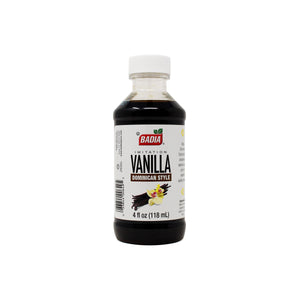
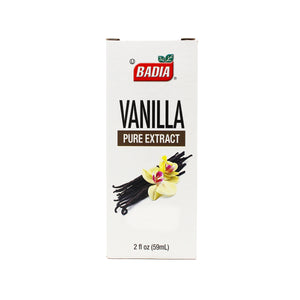
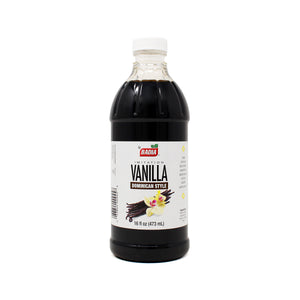
Which is why the bottle you reach for shapes the whole thing, and there are two honest traditions here, not a real one and a fake one. Pure vanilla extract carries the botanical complexity of the actual pod. Dominican-style vanilla, the bottle in nearly every Caribbean kitchen, carries a bold, familiar bakery aroma that generations of Dominican and Caribbean cooks recognize as the smell of home: their grandmother's flan, bizcocho, and tres leches. Technically it's an imitation, made to deliver that aroma without the pod. In practice it's a baking tradition of its own, and for this style of rich, milky dessert it is often what people mean when they say this is how it's supposed to taste.
Many homes, one custard
The shared custard is where the countries stop agreeing, happily. In Mexico, flan often goes richer with a little cream cheese (the beloved flan napolitano), or gets crowned with cajeta, the goat's-milk caramel. In Cuba it leans bright, sometimes scented with citrus or a whisper of rum. In Puerto Rico it turns tropical: flan de coco with coconut, or flan de queso. In Argentina it arrives under a heavy spoon of dulce de leche and a cloud of cream, flan mixto. In the Dominican Republic it's dense and deeply vanilla, the custard where a good vanilla shows off hardest. Same bones. Different dessert in every kitchen.
The shared ending
So when the flan comes out at the end of the meal, turned out of its mold with the caramel sliding down the sides, what's on the plate is an ancient custard, remade in Spain, and remade again in every country that received it. The recipe crossed an ocean once. Now it belongs to whoever makes it, and at most tables that means it belongs to somebody's mother.