The same pot, twice
There is a pot of sweet rice simmering somewhere in the Latin world right now. Rice, something sweet, something creamy, cinnamon: one of the oldest and humblest dessert ideas on earth, cooked wherever rice grows. In Latin America it comes in two versions that matter here, the everyday one and the Christmas one. Same idea, same pot, two completely different jobs.
Arroz con leche is the everyday one: the after-school, the Sunday, the there's-rice-and-milk-in-the-house dessert. Arroz con dulce is the special one, Puerto Rico's Christmas rice, made with coconut instead of milk and spiced like a celebration. Learn the everyday one and you can cook. Learn the holiday one and you can throw a Christmas.
The everyday: arroz con leche
Start with comfort. Arroz con leche, "rice with milk," is a soft, creamy pudding simmered with milk, sugar, and cinnamon, often with a strip of citrus peel and sometimes a splash of vanilla, served warm or cold with more cinnamon dusted on top. It's pan-Latin and then some. Spain makes it, Mexico makes it, Cuba, Colombia, the whole map, each a little different: creamier here, looser there, cinnamon-heavy in one house and citrus-bright in the next.
The dish is old and well traveled. Sweet rice puddings have moved across Asia, the Middle East, North Africa, and the Mediterranean for centuries; Iberian versions were shaped by that long exchange and crossed to the Americas, where local kitchens made them their own. It asks almost nothing. Rice, milk, sugar, cinnamon, patience. Which is the whole reason everyone grew up on it.
The holiday: arroz con dulce
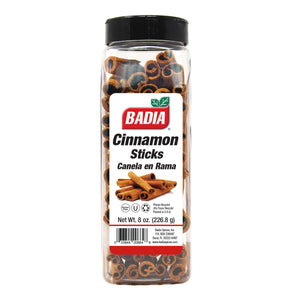
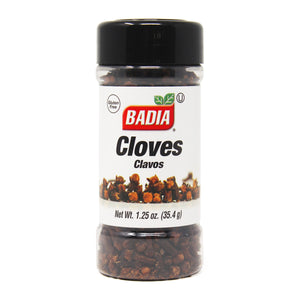
Now the celebration. Arroz con dulce, literally "rice with sweetness," is the Puerto Rican Christmas cousin, and it changes the everyday formula in two decisive ways. First, the liquid: coconut takes over as the base, sometimes joined by evaporated milk or enriched with cream of coconut, and the whole thing turns richer, more fragrant, clearly island. Second, the spice. Where arroz con leche whispers cinnamon, arroz con dulce announces it. The base gets steeped hard with cinnamon sticks, fresh ginger, and cloves, then studded with raisins. The rice simmers in that spiced coconut liquid until thick and glossy, and it's traditionally served cold, often set in a dish and cut into squares like something between a pudding and a promise kept.
This is the dish where whole spice does the heavy lifting. A cinnamon stick, a knob of ginger, and a few cloves working in the pot for half an hour will do what no quick dash of powder can. It sits on the Nochebuena table next to the coquito, the two of them making the same argument in different textures: coconut, warm spice, Christmas.
Two occasions, one pot
Take rice and make it sweet, and you get comfort. Trade the milk for coconut, steep it with whole spice, fold in raisins, and you get a holiday. Nothing about the base changed. Everything about the occasion did.
The everyday pot costs almost nothing and tastes like home. The Christmas pot costs one trip to the spice shelf and tastes like December. Same rice. Your abuela knew exactly which one she was making before she opened the cabinet.