This chapter explores a tradition through selected dishes and stories. Customs vary across households, regions, and generations.
There's a word for it, and the word is the whole point: Nochebuena, the Good Night. Not the good morning. In Cuban Miami, Christmas Day is for leftovers and a long nap. The real thing happens the night before, on December 24th, and it starts in the afternoon and doesn't end until the small hours.
By dark, the house in Hialeah or Westchester is full and loud. There's a pig out back in a caja china, yes, somebody's uncle has been tending it since morning, but step into the kitchen and that's not what's happening. What's happening is a pot of black beans and rice going glossy on the stove, a mountain of yuca waiting for its mojo, plantains hitting hot oil, dominoes slapping a folding table on the porch, and three generations talking over a radio nobody's listening to. The pig is the headline. The night is the story. And this is the table that taught this whole series its first rule: the great Christmases don't happen on Christmas. They happen on its Eve.
The night they kept
This particular Good Night carries something heavier than nostalgia, and it's worth knowing before you eat.
For people celebrating Nochebuena in Miami and elsewhere, the meal can connect generations through familiar flavors. The dishes do not stand still: ingredients, equipment, and the people doing the cooking all shape what reaches the table.
So the feast in that Hialeah backyard isn't only dinner. It is continuity, a way of keeping a night, and a homeland, alive across water and decades. For an exile community, the table is the island reassembled for a few hours: the same beans, the same mojo, the same songs, set down in a place where no one could tell you not to. Cuban Miami didn't just inherit Nochebuena. For a long time, it was where Nochebuena got to be itself.
The sides are the feast
Which brings us to the food, and to a small heresy, lovingly offered: at Nochebuena, the pig is not the meal. The sides are the meal.
The lechón is magnificent and it gets all the photos, but it's one thing on a table built from many, and the many are what people actually pile on the plate. First, the rice: congrí, black beans and rice cooked together in one pot until the grains go dark and savory, built on a sofrito of onion, pepper, and garlic, deepened with bacon, cumin, and bay. (Cook them separately and serve beans over white rice and you've made moros y cristianos: same soul, different spelling, and someone at the table will have opinions.) Then yuca con mojo: tender boiled cassava drowned in hot garlic-citrus mojo, the acid cutting clean through the richness of the pork. Then plátanos maduros, ripe plantains fried to caramelized edges, sweet against all that salt and garlic. A simple avocado salad to cut the fat. Croquetas and pastelitos circulating since the afternoon.
None of it is fancy. All of it is the everyday Cuban table, cooked to its absolute best on the one night it matters most. That's the secret of the sides: they're not the supporting cast. They're home.
Mojo is the mother sauce
And running underneath the whole table is one flavor, the thing that makes a Cuban kitchen smell like a Cuban kitchen: mojo criollo.
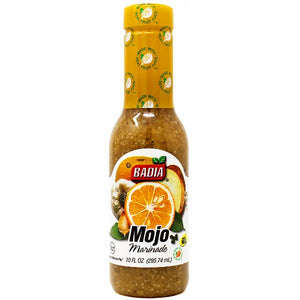
It is gloriously simple and gloriously familiar. Garlic, a lot of it, mashed with salt in a mortar into a pale paste, bloomed in hot oil until it sizzles and roars, then hit with the juice of naranja agria, the bitter Seville orange that gives Cuban food its particular tang. Cumin, oregano, a bay leaf, black pepper. That's it. That's the sauce that dresses the yuca, seasons the beans, and marinates the pig, the single thread that ties every dish on the table to every other one. Learn the mojo and you haven't learned a recipe. You've learned the grammar the whole night is spoken in.
Sweet, then the Mass
The night ends twice: once in sugar, once in church.
The sweets come out late: buñuelos, the figure-eight fritters of yuca-and-malanga dough, fried fresh and drowned in an anise syrup; turrón, the dense Spanish nougat unwrapped only at Christmas; flan, cascos de guayaba with cream cheese, a tray of pastelitos. Then the cafecito, tiny and sweet and strong, the fuel for what comes next. Because near midnight, the ones who keep it head to Misa de Gallo, the Rooster's Mass, to mark the reason the night has a name at all, and come home to a table that's somehow still going.