This chapter explores a tradition through selected dishes and stories. Customs vary across households, regions, and generations.
On Christmas Eve in Santa Fe, you walk Canyon Road and the adobe is on fire, gently. Thousands of farolitos, brown paper bags weighted with sand, each holding a single candle, line the walls and rooftops until the whole street is a galaxy at knee height. The air smells of piñon smoke and, underneath it, roasting chile, and children run ahead counting whose candle has guttered out and whose still burns. It is, very possibly, the most beautiful Christmas Eve in America.
And it runs on a question. New Mexico's official state question, this is a real thing, on the books, is "Red or green?," meaning which chile you want on your food. It comes up at every meal, all year. But there's a third answer, and at Christmas it's the only one that matters: ask for "Christmas" and you get both, red chile and green, side by side on the plate. Red and green, the colors of the season, the two halves of the state's soul, the whole holiday folded into a lunch order. This chapter is that answer. In New Mexico, the question is always red or green, and the most New Mexican reply, the Christmas reply, is both.
Older than the country
To understand why this Christmas feels like another country, you have to know it's older than most of this one.
Northern New Mexico holds one of the oldest European-rooted cultures in what's now the United States, Spanish-speaking Hispano families in these high mountain valleys whose communities trace back to the late sixteenth century, generations before the Pilgrims, and who stayed so isolated for so long that they kept a Spanish, a faith, and a foodway found nowhere else. Layer onto that the Pueblo peoples, here for many centuries before any of that, and later waves of Mexican and Anglo arrivals, and you get what New Mexicans call their tri-cultural inheritance, Native, Hispano, and Anglo braided together. The territory didn't even become a state until 1912. The result is a Christmas so specific that, as locals like to say, the recipes barely cross the state line. You cannot get this Christmas anywhere else, because it was assembled, over four centuries, out of ingredients that only ever met here.
Lighting the way
Those candle-lit bags are the signature, and they come with New Mexico's most cherished argument.
Call them farolitos and you're from the north, around Santa Fe, where a farolito is the paper-bag lantern and a luminaria is something else entirely, a small bonfire of stacked piñon logs. Call the bags luminarias and you're from Albuquerque or the south, where that is the word. New Mexicans have been cheerfully feuding over this for more than four centuries; the state legislature has actually weighed in more than once. But whatever you call them, the meaning is shared and old: lit on Christmas Eve, they line the path to the church and the home to light the way, for worshippers heading to midnight Mass, and, in the older telling, for the Holy Family searching for shelter on a cold night. That older telling has its own ritual, Las Posadas, the nine-night procession from December 16th, reenacting Mary and Joseph going door to door, turned away and finally taken in, the whole neighborhood singing the call-and-response.
And on the same night, at the Pueblos, older fires burn. At places like Taos, Christmas Eve brings towering bonfires and a sacred procession, the singing in Tiwa and Spanish and English at once. These are not performances; they are living ceremonies, and visitors who are welcomed come as quiet, respectful guests, no cameras, no phones, no recording. It's worth saying plainly, because the temptation to treat the beautiful as a backdrop is exactly what reverence resists.
Christmas on the plate
Back in the warm kitchens, the food is as singular as the lights.
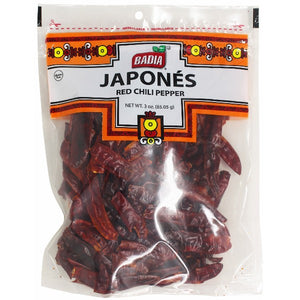
It begins, often, with posole, a deep, soul-warming stew of hominy, pork, and red chile that shows up on nearly every Christmas Eve and New Year's table. (New Mexican posole keeps it simple and lets the chile lead, where its Mexican cousin piles on the garnishes.) There's red chile and green chile on everything, the famous Hatch-grown peppers that the state builds its cooking around, strings of dried red ristras hanging against the adobe. And then there's the cookie, the official one. Biscochitos: crisp, flaky little anise-and-cinnamon shortbreads, made traditionally with lard and cut into shapes, dusted in cinnamon sugar, served with coffee or cider. They are so beloved that New Mexico's legislature once spent real time debating the official spelling. Add tamales made in holiday batches, sopaipillas with honey, the nutty thread of piñon through the coffee and the pie, and you have a table that tastes like nowhere else in the country, because it refuses to be anywhere else.
The question is the answer
So here is the whole of a New Mexican Christmas, in one syllable.
The question the whole state runs on is red or green, a choice, a binary, pick a side. And the answer New Mexico gives at its most festive, its most itself, is the refusal to choose: Christmas. Red and green together, candle and bonfire, Hispano and Pueblo and Mexican and Anglo, all of it at once.
Ten thousand small flames, lit to guide somebody home, around a bowl of red and a bowl of green, in a high desert that has been keeping this exact Christmas for four hundred years and has no intention of doing it like anyone else. Red or green? Here, at Christmas, the answer is always both.