This chapter explores a tradition through selected dishes and stories. Customs vary across households, regions, and generations.
Here's a strange thing about the German Christmas: you're probably already celebrating it.
Not a version of it. Not an influence on it. The actual thing, the evergreen tree standing in the living room, the glass balls hanging on it, the little doors of the Advent calendar, the gingerbread house on the counter, the cut-out cookies, the man who comes on Christmas Eve. Pull almost any thread of what Americans think of as the default Christmas, the plain unmarked baseline one, and it runs back to Germany. There's no exotic, far-off German Christmas waiting to be discovered, the way there's a Filipino one or a New Mexican one. The German Christmas already won. It became everyone's. This chapter is just the part where you find out the house you've been living in was built by somebody in particular.
The source code
Start with the tree, because the tree is the whole argument in one object.
The decorated evergreen, the Tannenbaum, took its familiar indoor form in Germany centuries ago, by the 1500s, candles added (legend says by Martin Luther, though that's a story) to mimic stars over Bethlehem. The shiny glass ornaments that hang on it were first blown in the German region of Thuringia and later silvered to a mirror shine by a German chemist. The man who brings the gifts? After the Reformation moved gift-giving to Christmas Eve, Germans said the presents came from the Christkind, the Christ Child, and when that name crossed the ocean and got mangled by English-speaking mouths, Christkindl became Kris Kringle. America's jolly Santa is wearing a German baby's name.
And it keeps going. The Advent wreath with its four candles: German. The Advent calendar, invented by a German mother filling little boxes with gingerbread to quiet a child's impatience: German. The Christmas market full of glühwein and roasted nuts and gold-foil angels, the Christkindlesmarkt, German, going back to Dresden in 1434. The Nutcracker, before it was a ballet, was a German fairy tale. Even the carols you hum without thinking, "O Tannenbaum" and "Silent Night," come from the German-speaking world. The whole cozy, candle-lit, pine-scented feeling of the season, what the Germans call Gemütlichkeit, is essentially a German invention that the rest of us adopted and forgot to credit.
The door was Pennsylvania
So how did one country's Christmas quietly become everybody's? Through immigrants, and mostly through one state.
Beginning in the early 1700s, German families settled heavily in Pennsylvania, the Pennsylvania Deutsch, "Deutsch" being their own word for "German," which their English-speaking neighbors promptly misheard as "Dutch." (They aren't Dutch. They never were.) They brought the tree with them, and the first Christmas trees publicly displayed in America went up in Pennsylvania in the 1830s, strung with apples and cookies and popcorn. Among them were the Moravians, who back in 1741 had built a settlement with a stable on one end and a chapel on the other, and, hearing the cattle low through the wall on Christmas Eve, named the place Bethlehem. (Yes: the same Moravians whose year-end vigil, in other hands, would become Watch Night. They got around.)
It wasn't an instant hit. The Puritans had actually banned Christmas; one colonial governor called the tree a "pagan mockery." For a long time the indoor tree was filed under "curious German custom." Then, in 1848, a London newspaper ran a drawing of Queen Victoria and her German husband, Prince Albert, gathered with their children around a Christmas tree, and the curious German custom became, overnight, the height of fashion on both sides of the Atlantic. More German waves followed, seeding Weihnachten into Milwaukee and Cincinnati and the Texas Hill Country, until the German Christmas stopped looking German at all. It just looked like Christmas.
Stollen, lebkuchen, and the cookie table
The food made the same crossing, and it's the part most worth bringing back.
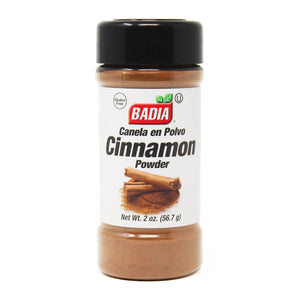
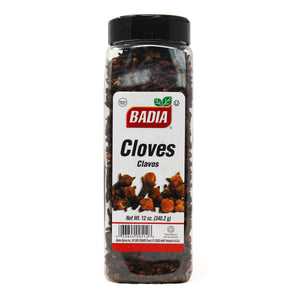
The showpiece is stollen, a dense, buttery fruit-and-nut bread, often hiding a rope of marzipan, folded into a shape meant to suggest the Christ child in swaddling clothes and buried under a snowdrift of powdered sugar. The famous one comes from Dresden, where it's been baked since at least 1474, and it will change your mind about the word "fruitcake." Beside it goes lebkuchen, the soft, spiced gingerbread of Nuremberg, the ancestor of every gingerbread house, a craft the Pennsylvania Germans carried over whole. And then the cookie table, the German Christmas at its most generous: springerle pressed from carved wooden molds, peppery pfeffernüsse, cinnamon-star zimtsterne, a dozen kinds of Plätzchen baked in tins through Advent. A pot of glühwein, mulled red wine, warm with cinnamon and clove and orange, turns the whole kitchen into a market stall. It is the coziest table in the book, and it was designed that way.
Where the tree came from
So this is the quiet revelation under the lights: when an American lights the tree, hangs the glass ball, opens the little Advent door, builds the gingerbread house, sets out cookies for a man whose name is a German baby's, and hums "O Tannenbaum" without knowing what the words mean, they are keeping a German Christmas. They have been the whole time.
More often than it realizes, America gathers in a room shaped, down to the evergreen and the candlelight, by the people of Weihnachten. Every other chapter in this book is a tradition that knows exactly how distinct it is, the Nochebuena, the Réveillon, the Watch Night. This one is the strange opposite: a tradition so successful it disappeared into the background and became the baseline everyone else celebrates around. The tree in your window came from somewhere. It came from here. Now you know whose hands first set the candles in the branches, and lit them, to look like the stars over Bethlehem.